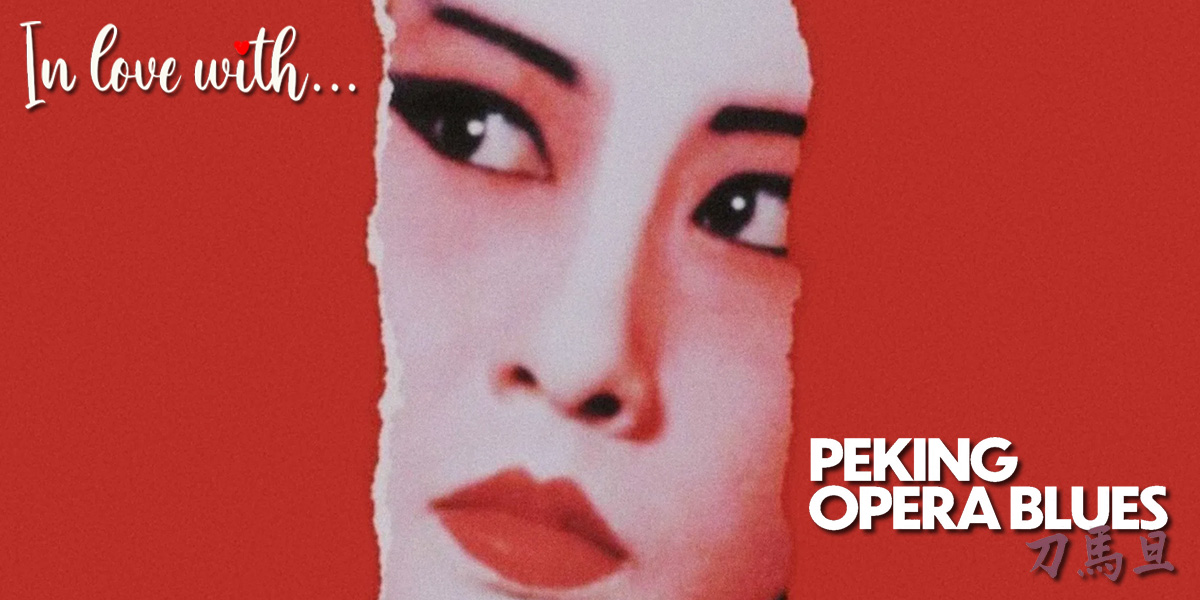
What a year 1986 was! Liverpool won the Double and cinema was bursting with films that would be among my all-time favourites: ‘Big Trouble in Little China’, ‘F/X’, ‘The Hitcher’, ‘Running Scared’, ‘Aliens’, ‘Crocodile Dundee’, ‘Tough Guys’ and ‘Jumpin’ Jack Flash’ were released in the US; ‘Armour of God’, ‘A Better Tomorrow’ and ‘Righting Wrongs’ appeared in Hong Kong. And Hong Kong New Wave director Tsui Hark made a film that it would take a good decade to be fully appreciated by yours truly. I remember recording ‘Peking Opera Blues’ when it appeared on UK TV for the first time, a period when I obsessively consumed anything from Hong Kong cinema when it appeared on these shores. And yet it sat on the BASF (probably) VHS cassette for a few years before I finally tackled it; how much fun could an action film with a trio of female leads really be without a Sammo or Jackie to help out? I confess that I finally sat down to watch it purely for the loveliness of Brigitte Lin, Sally Yeh and Cherie Chung, but to my defence I quickly realised that this was an exceptional film in its own right. My fellow reviewer, Andrew Saroch, seems to agree, according to his effusive words on this site.
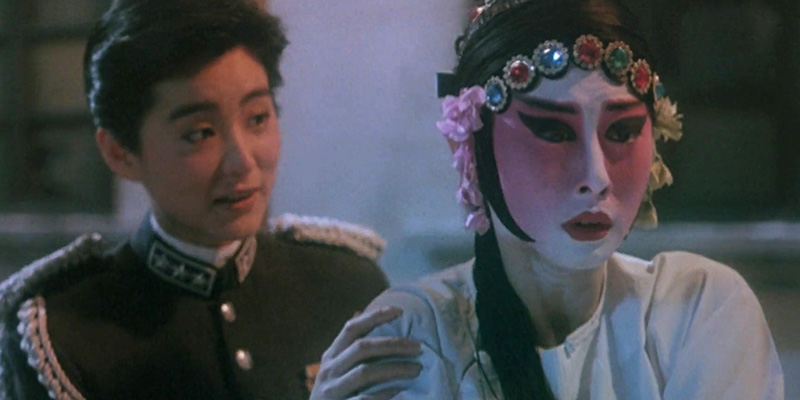
I decided it was time to revisit ‘Peking Opera Blues’ after the exciting news that Arrow would be releasing a 4K Blu-ray on these shores; while many were, naturally, quite excited by the John Woo films turning up after the Shout Factory/Cinema City and Golden Princess deal, I was really hoping that Tsui Hark’s glorious effort would be among the initial wave. I sat and watched ‘Peking Opera Blues’ with Mrs Pugh this past week and by the end of the 104 minutes, we were uplifted in a way that we had forgotten cinema was capable of.
‘Peking Opera Blues’ is a wonderful film, a rip-roaring adventure that celebrates Hong Kong, action, comedy, romance and ‘Strong Female Characters’. Yes, I used that odious term. But this isn’t the agenda-driven incarnation of the term that 21st-century fiction offers, where self-inserts and clumsy polemic abound. This isn’t a crudely propagandised piece determined to bludgeon its audience over the head with its progressive cudgel. This is a trio of maturely written characters who have depth, strength, femininity, fortitude, courage and vulnerability — they are human. Heroic and radiant perhaps, but captivating throughout. I do have a weakness for stories with strong friendships at the centre, whether they be male or female — I adore a good Venoms film or ‘Our Little Sister’ because, along with everything else, they are about the bonds of friendship. ‘Peking Opera Blues’ is just that — a film where friends find a bravery and inner strength that propels them through tremendous adversity. The character arc of each of the leads is pitch-perfect, their journey to the end as captivating as the action sequences. There is one scene in particular that put a lump in my throat: around an hour in, the three protagonists find themselves under a dusting of snow and huddle together under a cloak to stay warm. Such a minor moment, but somehow joyous on a level that only cinema can achieve.
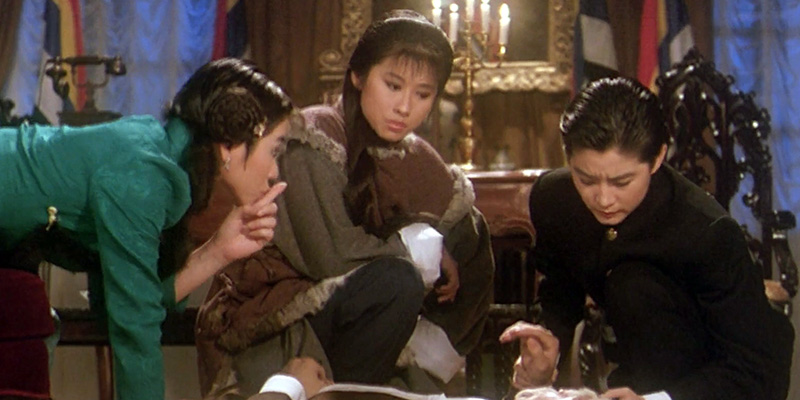
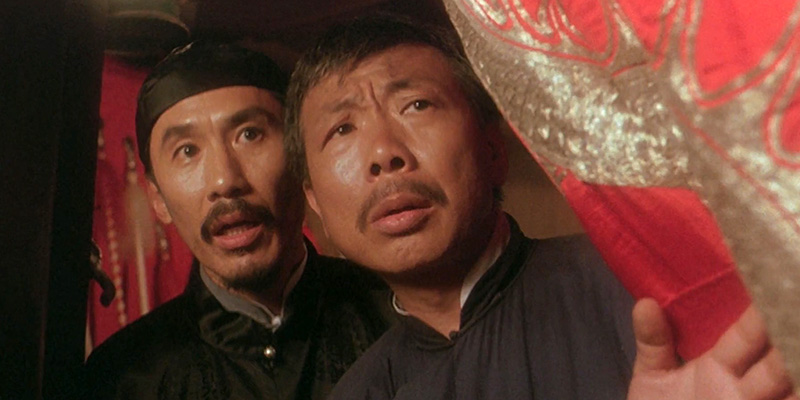
Outside of the main three, ‘Peking Opera Blues’ also provides some solid support from Mark Cheng, Cheung Kwok-Keung and Kenneth Tsang. These three are also afforded nuanced roles, with Cheng the courageous rebel leader, Cheung the unlikely hero and Tsang the villain who is much more complicated than the moustache-twirling antagonist (and he does have pretty impressive whiskers) that he initially appears to be. There are smatterings of romance, with a love triangle between Cheng, Lin and Yeh and a few tentative glances between Chung and Cheung adding flavour to the heady blend. Everything works perfectly and you get a real feeling for not only how wonderful Hong Kong cinema once was but how wonderful film in general could be. We might never see the like of this again, but we can celebrate it with exceptional releases like the recent 4K Blu-ray release. Treat yourself to this masterpiece whether you are new to Hong Kong cinema or a long-time fan.