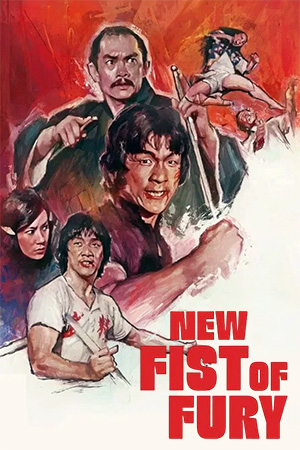
Following on immediately after Bruce Lee’s ‘Fist of Fury’, ‘New Fist of Fury’ opens with Mao (Nora Miao) having to escape to Taiwan after the events of the first film. On arriving, Mao finds that Taiwan is also struggling under the Japanese yoke and she struggles to establish a new school there. Meanwhile, Japanese master Okimura (Chan Sing) is put in charge of the province and, though he attempts a more conciliatory approach, finds the locals unsurprisingly hostile to his presence. Potential rebellion comes in the shape of previously indifferent Ah Lung, who starts to get involved in the nationalistic uprising in Taiwan. This puts him and Mao on a collision course with Okimura and the Japanese forces.
Let me explain my strange journey to appreciating ‘New Fist of Fury’. I first saw it prior to my own interest in Hong Kong films, with my brother hiring anything even slightly related to Bruce Lee from the corner shop. I immediately wondered why Ernie Wise was dubbing the lead star, noticed the very pretty Nora Miao and remembered very little thereafter. Fast forward a few years and I have fully embraced all things Jackie Chan and revisit this; having just caught up with some of his post-‘Drunken Master’ classics, the disappointment was palpable. Yet I watched it a few more times over the years and have now reached a point of becoming quite defensive about this pre-fame Jackie Chan film.
The first unfortunate thing is that it is saddled with a title linking it to a beloved Bruce Lee film – that was always going to aggravate audiences. ‘New Fist of Fury’ is a much less slick and polished film, with the action in particular being intentionally messy and awkward. It makes for a gritty genre piece that, in its two-hour version, has a surprising amount of depth throughout. It’s much less binary than ‘Fist of Fury’, with even the main antagonist being more than just ‘Evil Japanese Villain No.1’. It also introduces intriguing elements into the mix, namely the hero’s mother, who is a ‘comfort woman’ for the enemy. It’s a brave move and adds emotional turmoil to what is often merely Chinese characters getting revenge against the Japanese.
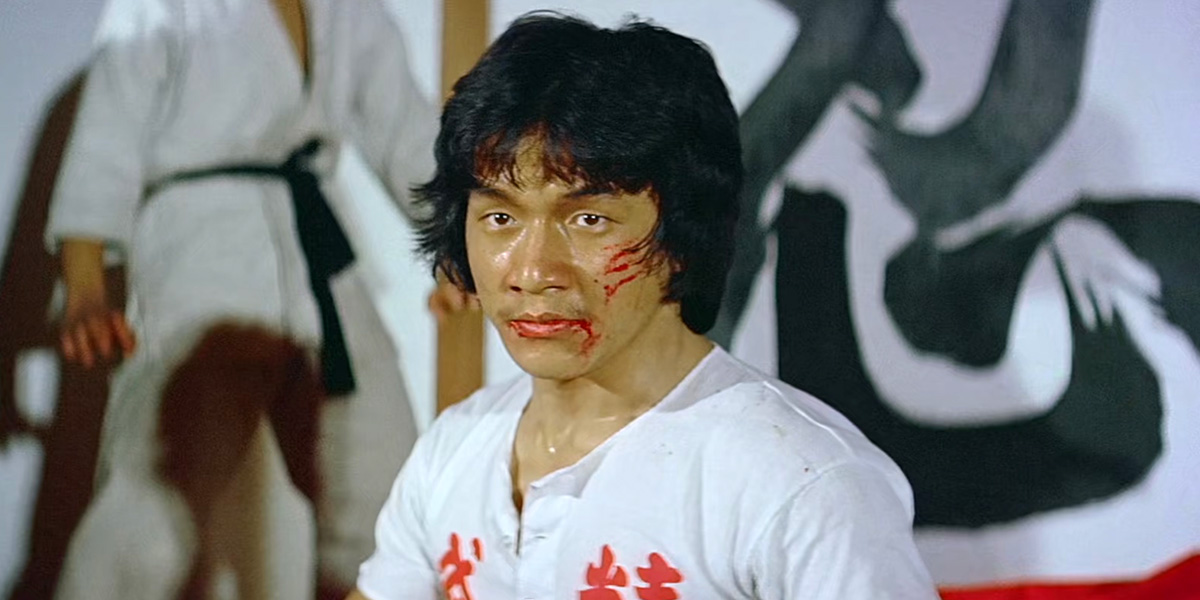
Jackie (or should that be ‘Jacky’) is a raw, crude presence that hasn’t quite reached the meteoric levels of charisma he would later attain. Still, it’s clear that the potential is there and, while he isn’t the force of nature that Bruce Lee was in ‘Fist of Fury’, he shows his mettle throughout. The action is mainly reserved for the final thirty minutes, but it doesn’t feel like a long slog to get to it. It might not be as beloved as films like ‘Police Story’ or even ‘Snake in the Eagle’s Shadow’ (which would follow three years later), but it has enough going for it to deserve a reappraisal.