
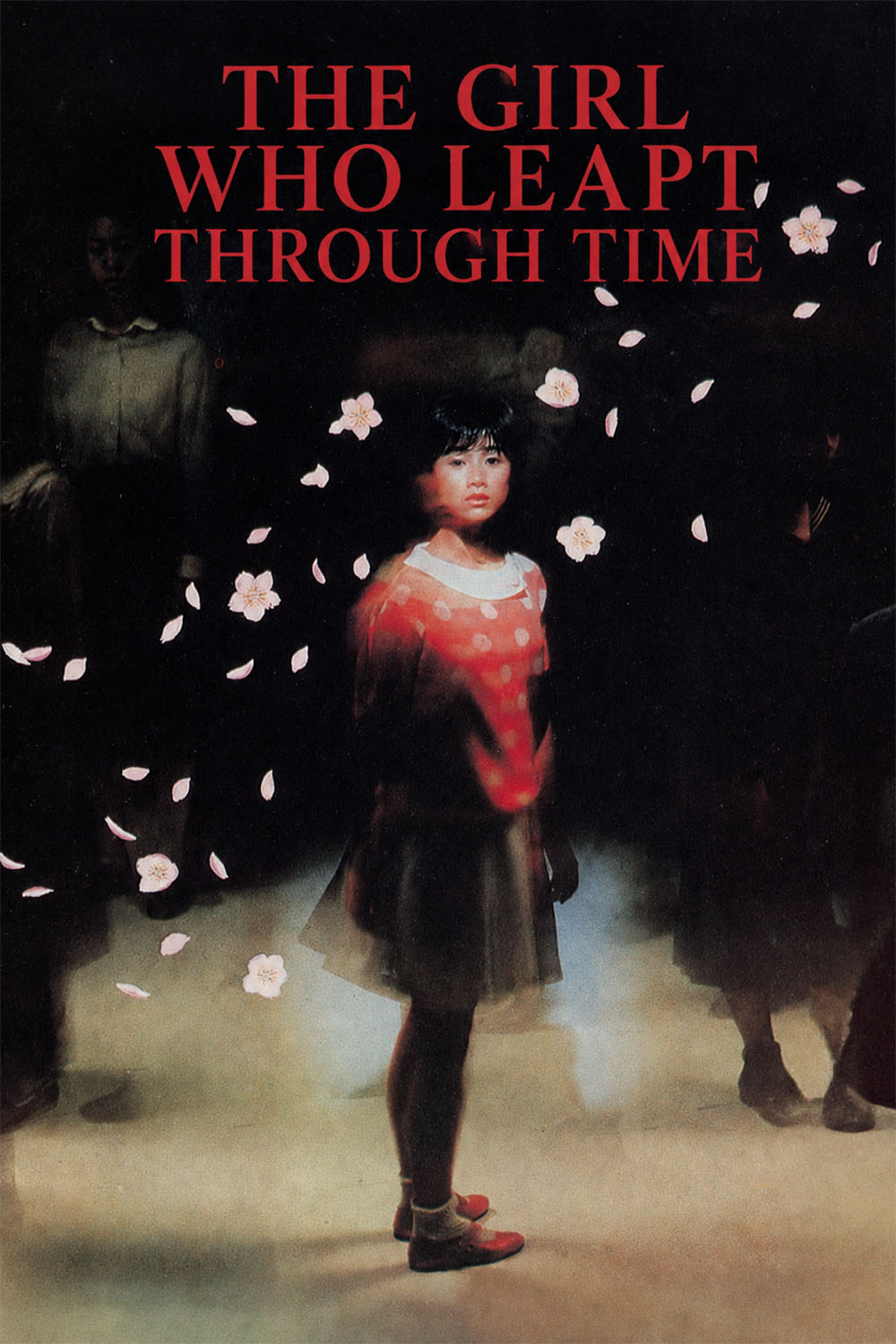
Six years after the demented classic ‘Hausu’, Nobuhiko Obayashi adapted Yasutaka Tsutsui’s sci-fi novel ‘The Girl Who Leapt Through Time’. Yet, while it borrows some of its director’s surrealist eye, it is a more conventional affair.
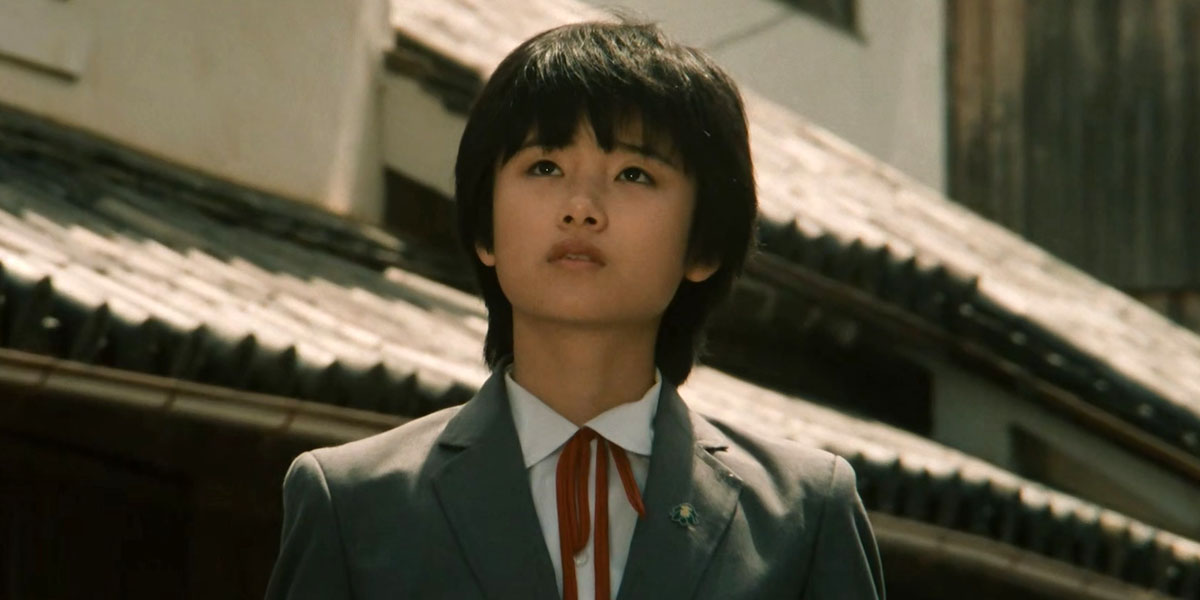
High school student Kazuko is asked to clean the school laboratory one afternoon while her classmates leave for the day. An accident while cleaning mixes together an array of different compounds which Kazuko inhales, fainting thereafter. When her classmates return to check on her, they discover the fallen Kazuko and rush her to the school infirmary. Though there doesn’t seem to be any long-lasting damage from the mysterious vapour, Kazuko finds that certain events are repeating themselves. Her friend assures her that this is just déjà vu, but Kazuko experiences other strange occurrences that suggest that she might be stuck in a time loop.
A story like this lends itself to Obayashi’s surreal style and otherworldly aesthetic. Yet while it starts well – a black-and-white scene that is literally invaded by colour – it can’t quite weave its moments of visual splendour with an involving story. It’s frustrating as there is much to enjoy here; the sights and sounds are dappled with an oneiric tinge that certainly makes it startling. Obayashi might be making films for a mainstream audience but, like ‘Hausu’, he pushes forward with a bold approach that is uniquely his own.
The issue with ‘The Girl Who Leapt Through Time’ is that this main time-loop narrative isn’t very involving. It’s executed in such a meandering manner that it is hard to feel invested in events. There didn’t seem to be a feeling of jeopardy or peril, more of inconvenience; one thing about using time loops or time travel in stories is that there has to be a sense of danger or the fear of being stuck in another time. ‘The Girl Who Leapt Through Time’ plays with a small-scale time loop and never shows it to be especially detrimental to most of the cast. I’m also not sure how to take the twist at the end: an insane deus ex machina or an appropriately absurd ending to the film? Not being very familiar with the novel, I cannot say for certain, but I was definitely leaning towards the former. ‘The Girl Who Leapt Through Time’ is a pleasant diversion away from modern cinema, but it could have been so much more.