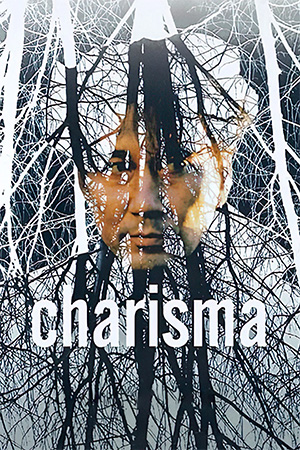
From the director of ‘Cure’ and ‘Pulse’, ‘Charisma’ is another slow-burn exercise in character, atmosphere, and suggestion that, while not fully venturing into outright horror territory (like those aforementioned films), is nevertheless an often unsettling albeit thought-provoking experience.
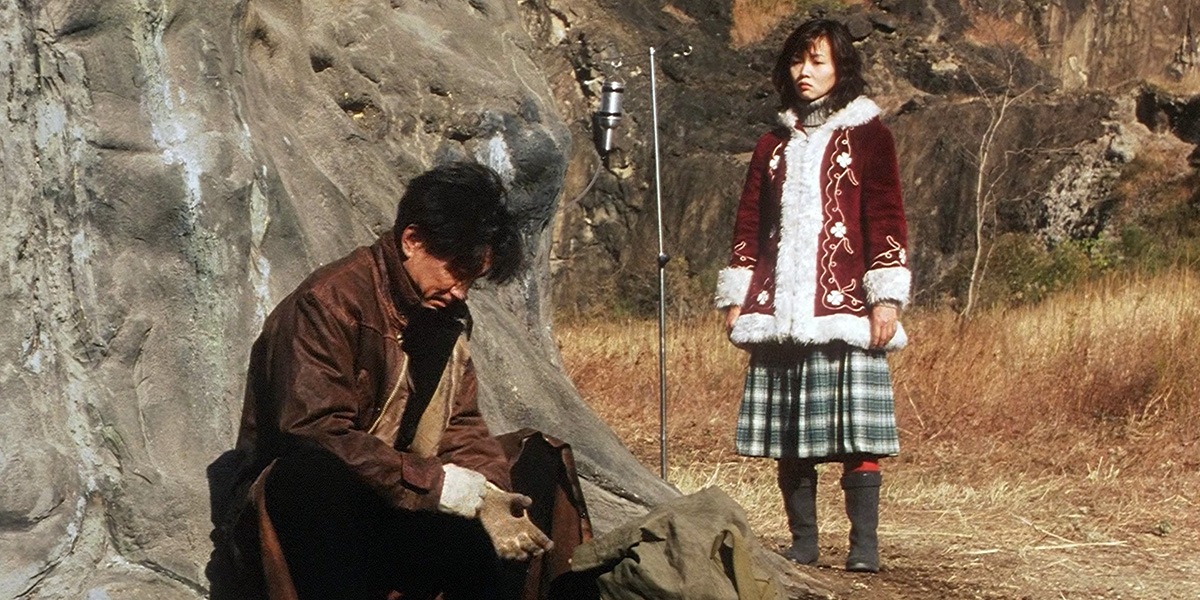
After a botched hostage negotiation where experienced detective Yabuike (Koji Yakusho) fails to react in time, causing the death of the hostage and his captor, he flees into the nearby mountain forest with no real direction in mind. Wandering aimlessly, Yabuike flits between three groups of people all residing in the forest: a group of tree planters (and magic mushroom pickers!), an academic and her sister studying the surrounding area, and a young man (holed up in an abandoned hotel/asylum) protecting a singular tree called Charisma. It’s this young man and his devout protection of the tree that Yabuike ultimately attaches himself to, which sends him and the surrounding forest residents on a journey of discovery, potential madness, and eventual enlightenment, as the tree’s mysterious hold affects all in a manner of perplexing ways.
Like a lot of Kiyoshi Kurosawa’s work, ‘Charisma’ is definitely an acquired taste. Subtle, slow-burn, and steeped in meaning that may only be revealed on subsequent viewings, the film may be a hard watch for those not accustomed to Kurosawa’s style. While there are a few tense and arguably creepy moments, ‘Charisma’ is less horror-focused than some of Kurosawa’s more well-known efforts but there is still that unique sense of dread and feeling of something strange on the periphery that the director does so well. Beautifully photographed, the mountain forest location is a character in itself: an immersive environment that practically swallows the characters as they try to reason and make sense of what is going on around them.
The notion of whether a tree can be evil (is it poisoning the surrounding environment, causing those close by to act in irrational ways?) is a novel approach but only given slight credence here, the viewer left to decide what is actually happening in the forest. Koji Yakusho (the lead in Kurosawa’s ‘Cure’) gives another outstanding performance here as struggling detective Yabuike, a man who goes through an ever-evolving transformation as he finds himself more and more at home in the forest and with its eccentric inhabitants.
Don’t expect concrete answers or a definite conclusion here; this is Kurosawa in full-on rambling, thought-provoking, symbolising form, albeit shot through with his inimitable and charismatic (and gorgeously shot) approach that still fires the senses (and interest) even if ambiguity is laid on extremely thick.