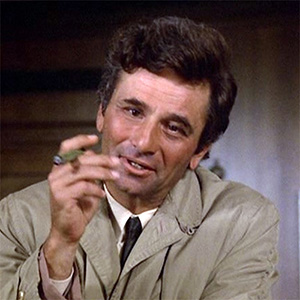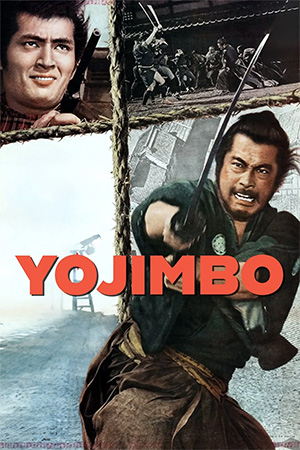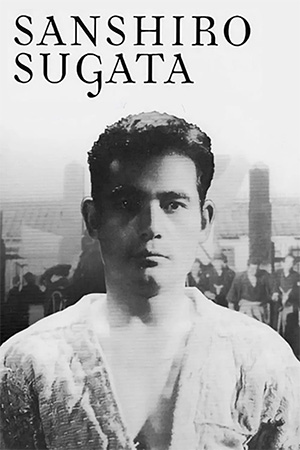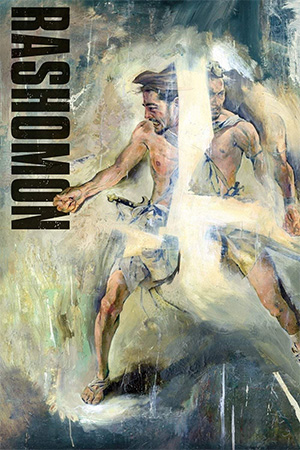
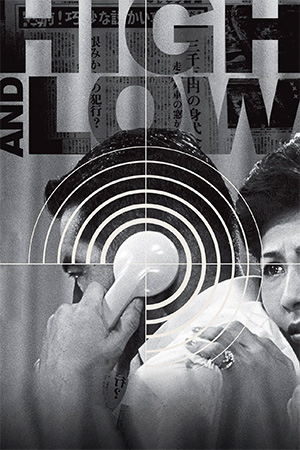
The recent death of Tatsuya Nakadai, not just one of the greatest actors in Japanese cinema but one of the all-time greats worldwide, has sent me back through his catalogue. First up is the Akira Kurosawa masterpiece ‘High and Low’, a film that casts Nakadai opposite the legendary Toshiro Mifune.
Kingo Gondo (Mifune), an executive at National Shoes, finds himself facing the boardroom when they propose a hostile takeover of the company. Not wanting the traditional heart of the organisation to be taken away, Gondo raises enough money to buy the outstanding shares of National Shoes. Before he can complete the purchase, though, his son is kidnapped and a ransom is demanded that will bankrupt him, scuppering his plans. It is quickly deduced, however, that his son, Jun, is safe and the boy that has been kidnapped is the offspring of his chauffeur. The kidnapper still demands the ransom from the executive, though, and Gondo is torn between friendship, duty and the knowledge that the payment is everything he has. Meanwhile, the police, led by Inspector Tokura (Nakadai), work tirelessly behind the scenes to find the criminal.
Based on Ed McBain’s ‘King’s Ransom’, ‘High and Low’ is Kurosawa giving a reverent nod to the American fiction that influenced him, whilst grounding the film in Japanese culture. It doesn’t really need a lesser voice like mine to reiterate it, but the result is something very special. How do you qualify such a statement? How do you explain what makes Kurosawa such an incredible filmmaker? The first thing to mention is the acting that he elicits from his cast – every performance is note-perfect and, as with so many Kurosawa films, the background characters resonate just as much as the main players. Naturally, Mifune will get many plaudits and, while Nakadai is not front and centre the way he would be in films like ‘The Human Condition’ or ‘Harakiri’, he is a mesmerising presence. Then there’s Kenjiro Ishiyama, who steals every scene he appears in as the determined Chief Detective Bos’n Taguchi – the fact that he stands out among such luminaries says everything about his performance.
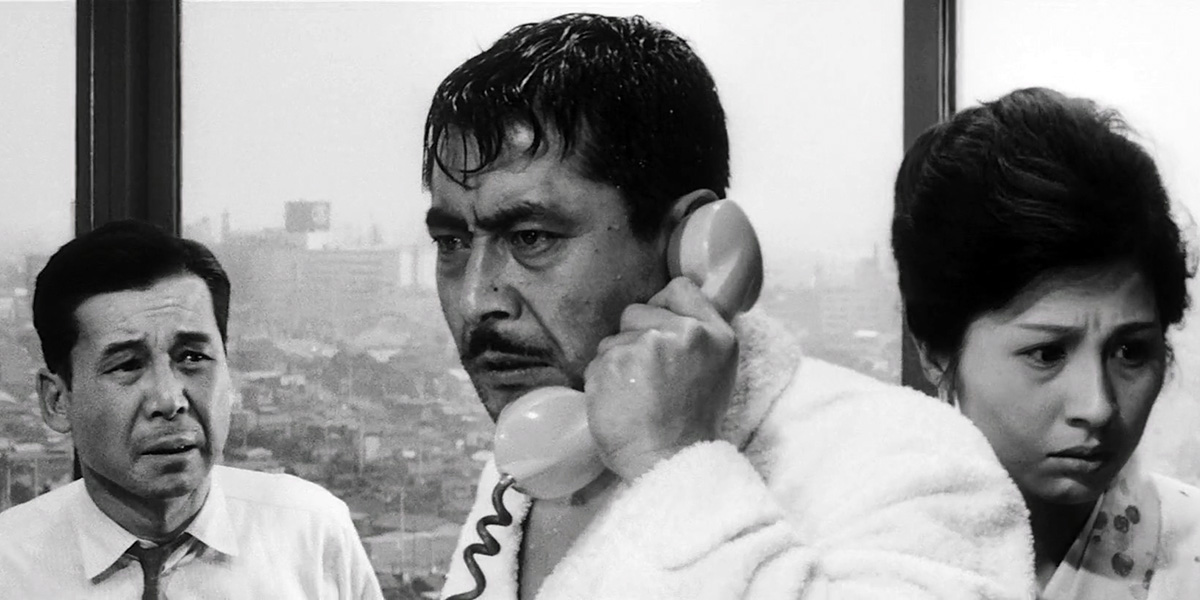
There’s a scene early on which reminded me why Kurosawa is on another level to many of his contemporaries. It is during a moment when the kidnapper phones to explain that, despite the victim not being Gondo’s son, he expects him to pay. Kurosawa chooses not to show this ‘live’, but in the replaying of the recording. He then pulls the camera back and allows each character to react to what’s being said. It’s difficult to convey the brilliance of this, but watching motives, thoughts and reactions unfold throughout is extraordinary. The first half of the film takes place predominantly in the living room of the Gondo residence and is choreographed with the skill of a ballet. Characters move around, occupy different spaces, pirouette around each other and give what should be a small area a sense of size. Kurosawa then layers quiet frame upon quiet frame of the characters looking in different directions to further convey that sense of a story that goes far beyond its initial setting. It might be me trying to sound all Film School, but it’s the kind of cinema that is hard to fault.
The second half of ‘High and Low’ is slightly, very slightly, inferior to the first. The procedural part is superbly executed, as is the aftermath of Gondo’s decision, but it lacks the tightness of the opening hour. In many ways, this is me nitpicking, though. ‘High and Low’ is one of the great police dramas and explores themes of duty, tradition and class, alongside being an excellent examination of how law enforcement pieces together the puzzle. Very highly recommended.